Stitched in Love
A Testament to Healing, Holiness, and Hope

Holy Covenant and Substack Readers,
Earlier this week, First Congregational United Church of Christ in Madison, Wisconsin, shared a story on their Facebook page that captured something powerful: healing love in the face of hate.
I’m not sure of all the details, but someone had vandalized their Pride flag. It was torn and left for them to find as a symbol of hate and rejection. But instead of simply replacing it with a new one, the congregation chose a different path. They did something that felt a lot like what Jesus would ask us to do.
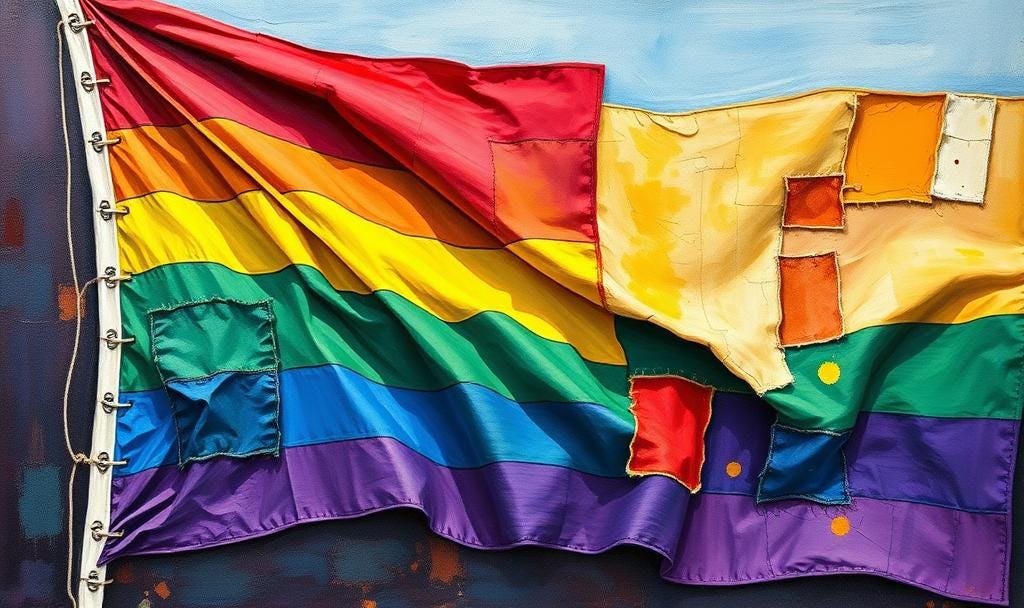
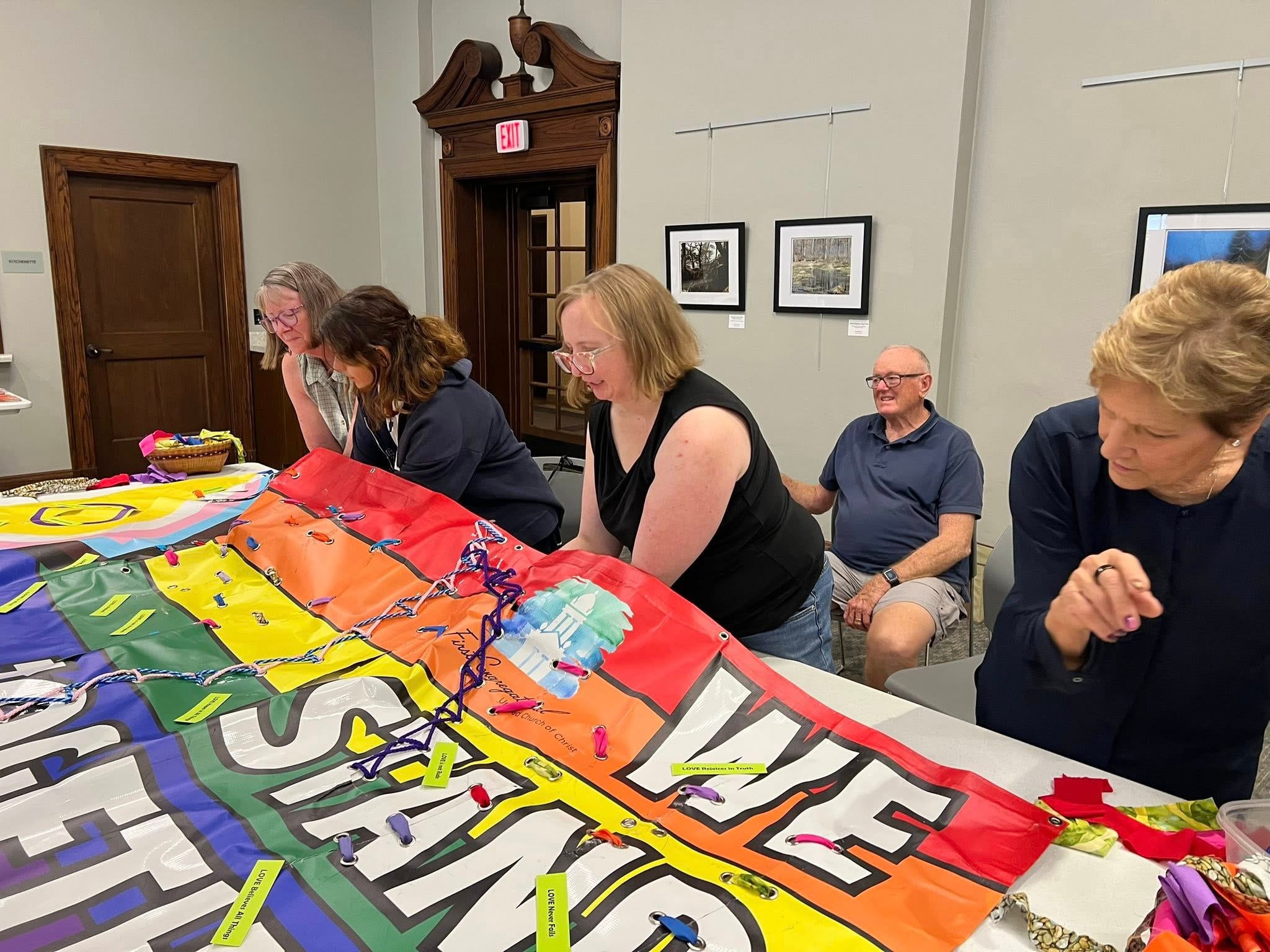
They stitched the flag back together.
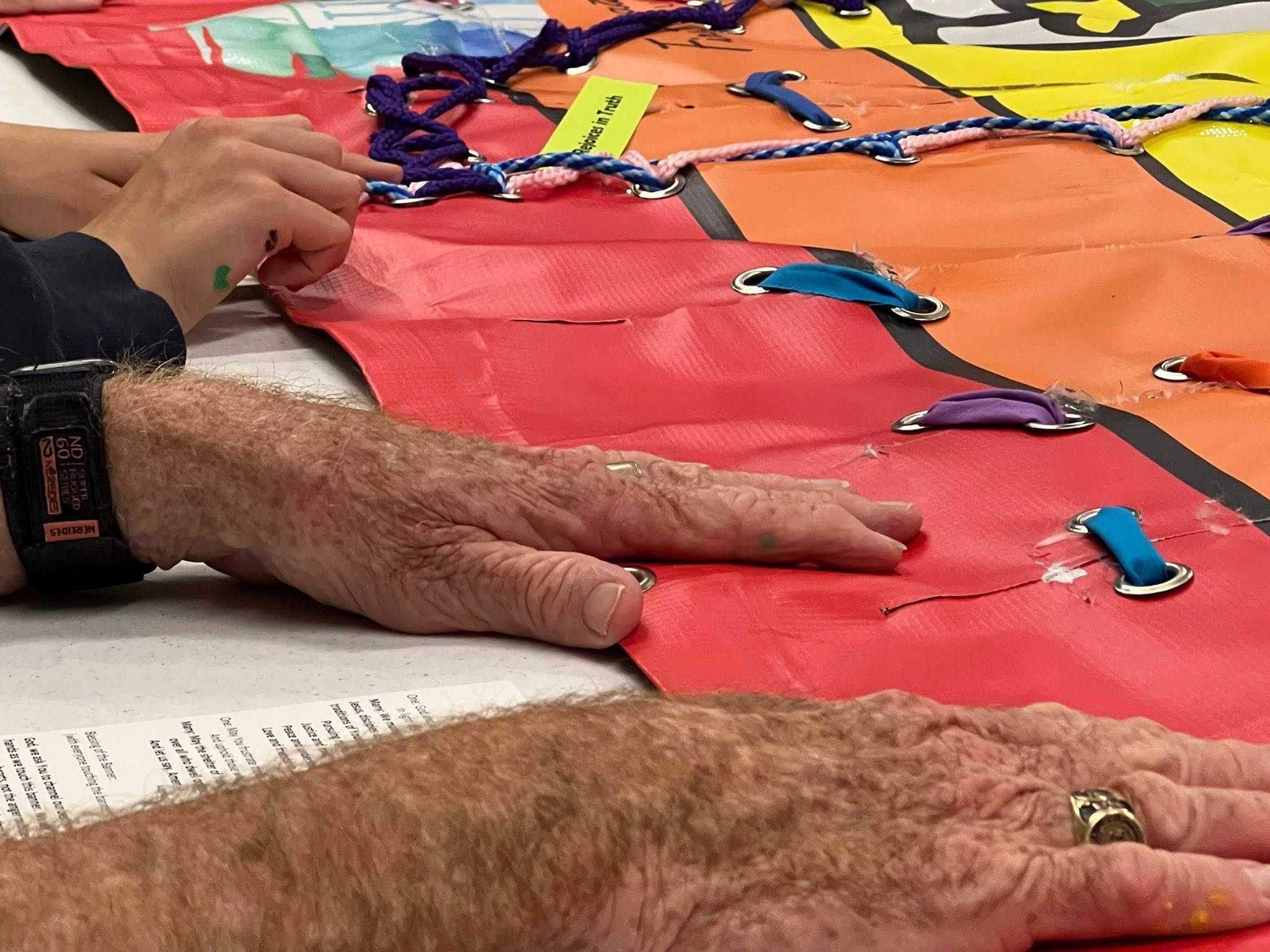
Using threads of color found in the trans and pride flags, they sewed the torn pieces together with bows, stitches, and seams, creating something meaningful and much more beautiful than before. Something that had been repaired and mended. Something that bore witness to the violence that occurred while defying it through love.
I was trying to recall references in the bible where we see precedence for this and was reminded of Ecclesiastes 3:7, where we find the words:
"a time to tear, and a time to sew."
These words in Ecclesiastes are part of a larger meditation on the seasons of life—grief and joy, death and rebirth, wounding and healing. Sewing is not just something we do; it is a metaphor for repair and restoration. In the bible, to sew is to proclaim that healing is possible, and we don’t always have to throw away what has been broken. We can mend. We can restore. We can heal. We can love things back together.
And I was also reminded of Exodus 26–28, where God gives the Israelites detailed instructions for the sewing, embroidery, and design of the tabernacle curtains. Blue, purple, red, and white linen yarns were chosen with care. The specific colors that were to be stitched into curtains speaks of intention and beauty, that purpose was woven into every thread that would veil God’s presence.
I lean toward the belief that this is what happened with this flag too.
By sewing it back together, First Congregational UCC declared that what some try to tear apart, God and our faith communities, can bind back together. And not just in beauty, but in the resilience of Queerness. Queer in the sense of holy defiance, sacred difference, and a love that refuses to be erased.
As queer theologian Patrick Cheng writes in his book Radical Love,
"At its core, queer theology is about the radical love of God breaking into the world in unexpected, boundary-crossing ways."
And that’s exactly what this flag now represents. It is a symbol of radical love. A flag no longer mass produced and expected to appear in a certain way while hanging on our church walls but one that’s made even more sacred by its scars. It’s a visual declaration that, in Christ, we will not be passive in the face of hate. We can mend what has been torn. We can embrace what has been rejected. We can repurpose what others have tried to destroy, creating something much more beautiful and meaningful in its resurrection.
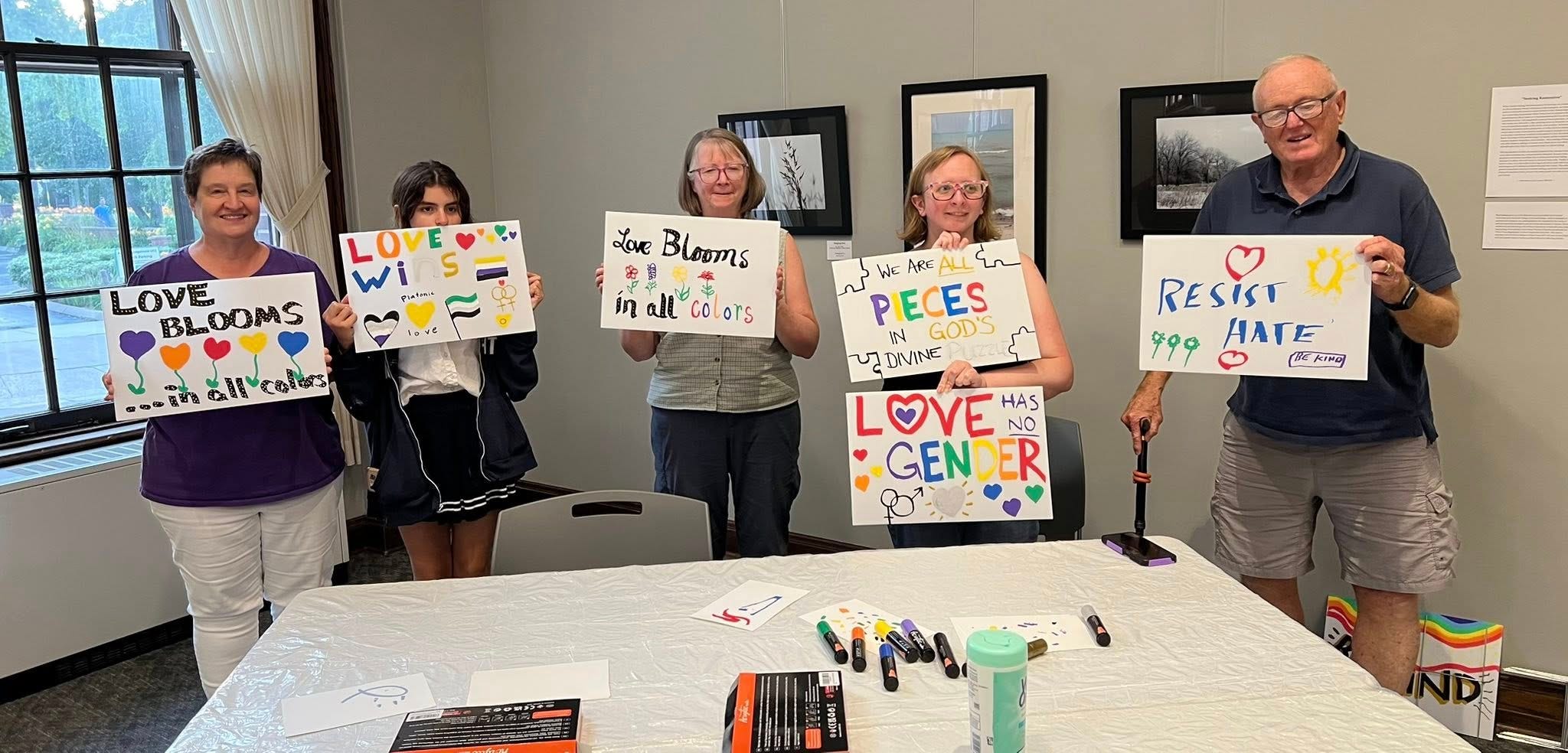
I found this story to be so touching because I think First Congregational UCC showed us what it means to be the church in a time when hatred feels so prevalent. In these times when hate and violence and prejudice seem to win the day, we must stitch. We must sew. We must show up. We must seek to embody a love that mends and restores what has been wounded.
So may we be a people who, thread by thread, stitch by stitch, proclaim with our lives that love is stronger than fear. That there is indeed a time to tear, but thank God, there is also a time to sew.
Thanks for reading Rev. Christopher Czarnecki’s Substack! Subscribe to receive new posts and support my writing work. Rev. Christopher Czarnecki currently serves as Senior Pastor of Holy Covenant United Church of Christ (UCC) in Charlotte, NC. To learn more about Pastor Chris and Holy Covenant UCC, you can visit us at our website, on Facebook, or Instagram.
*All liturgy, poems, and original writing shared on this Substack by Rev. Christopher Czarnecki may be used with proper attribution. You are welcome to incorporate these materials into worship, provided the following credit is included:
“Written by Rev. Christopher Czarnecki, Senior Pastor of Holy Covenant United Church of Christ. Used with permission.”
For printed or digital reproductions, please include a link to the original post when possible. For commercial use, adaptation, or publication beyond worship contexts, please request permission by contacting me at revchris@holycovenantucc.org.